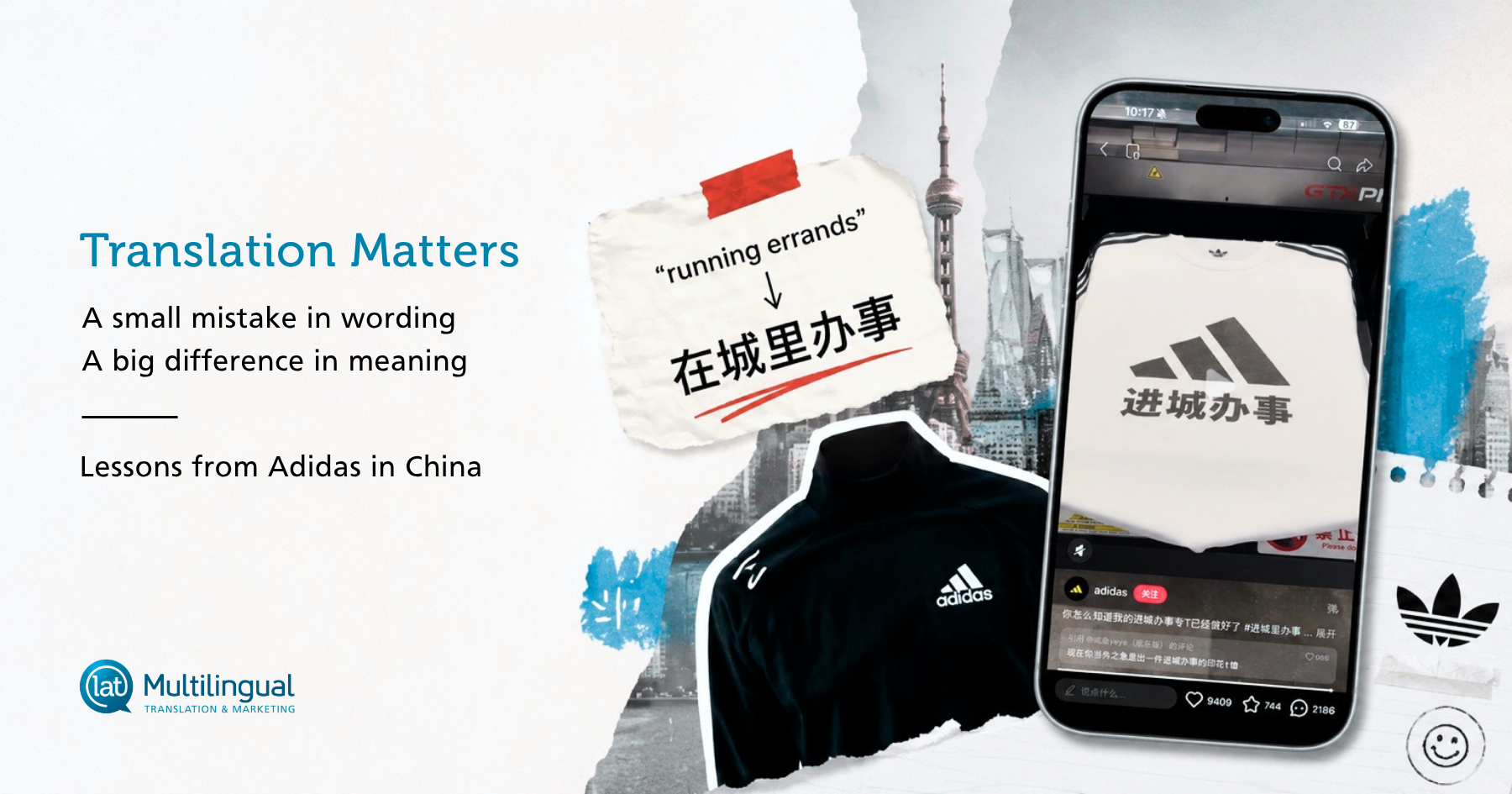
It started with a jacket.
Earlier this month, a product description on Adidas China’s website translated “running errands” as “在城里办事”, roughly meaning “taking care of business in the city”. The phrase wasn’t wrong exactly, but to Chinese readers it had an oddly bureaucratic ring to it. Not quite what you’d expect from sportswear copy. The memes followed almost immediately, spreading across RedNote (Xiaohongshu) before the moment could quietly disappear.
What happened next is where it gets interesting. Rather than issuing a correction and moving on, Adidas China’s local team leaned into the joke, responding to users with the kind of timing and cultural fluency that felt natural on the platform. At one point, the brand joked about its own small-town roots in Germany, turning what could have been a defensive moment into something self-aware and even charming.

Left to right: 1) The original product page where the translation was spotted, 2) a post from Adidas’ official RedNote account responding to the viral moment, 3) meme posts shared by RedNote users, and 4) Adidas ambassador and actor Li Xian wearing a meme-inspired T-shirt in his RedNote post.
The mistake itself was avoidable
One detail is especially important here: this is what can happen when translation goes out without proper professional review. The result was understandable, but culturally misaligned.
“Running errands” is breezy and casual in English. “在城里办事” lands differently, carrying a more formal, almost administrative quality that felt out of place in a sportswear product description. The meaning transferred. The tone did not.
Chinese is a language where nuance travels a long way. Small differences in word choice can shift the register of a sentence in ways that aren’t always visible until a native speaker reads it. A phrase that feels light and common in one language can come across as stiff or oddly specific once it crosses over. That gap, between what’s technically correct and what actually feels right for the audience, is exactly where professional translation and localization review make a difference.
Experienced translators don’t just convert words. They read context, consider the platform, and ask whether a message sounds natural to the people it’s meant for. For customer-facing content, whether it is a product description, campaign copy, or anything that carries the brand’s voice in a new market, that level of professional judgment is not a nice-to-have. This case shows why that review step matters.
Getting it right requires cultural insight
Adidas China’s handling of the moment deserves credit on its own terms. The brand read the room quickly, responded in a tone that felt natural on RedNote, and turned an unexpected moment into genuine engagement. That kind of response is harder to pull off than it looks.
It requires genuine cultural fluency and a deep understanding of how these platforms work. It also requires the authority to act quickly. When decision-making is disconnected from market insight, responses tend to arrive after the conversation has already moved on.
This is something that applies well beyond crisis moments. Day-to-day brand communication on platforms like RedNote, WeChat, Weibo, and Douyin operates according to its own logic. What works on Instagram rarely translates directly. What feels authentic to a Chinese audience on one platform may land differently on another. Navigating that requires people who genuinely understand the market, not just observe it from the outside.
What this means in practice
For international brands operating in China, the Adidas case is a useful reminder that quality translation and marketing expertise are not separate workstreams. They are connected, and gaps in either one show up quickly. Brands that bring both together are better positioned to communicate with clarity, earn trust, and build lasting connections with Chinese consumers.
Getting the language right before content goes live requires several steps of quality assurance. Professional translation and thorough localization review help keep marketing campaigns on target.
Adidas China handled the recovery well, but the stronger lesson here is that the issue should have been caught before launch.