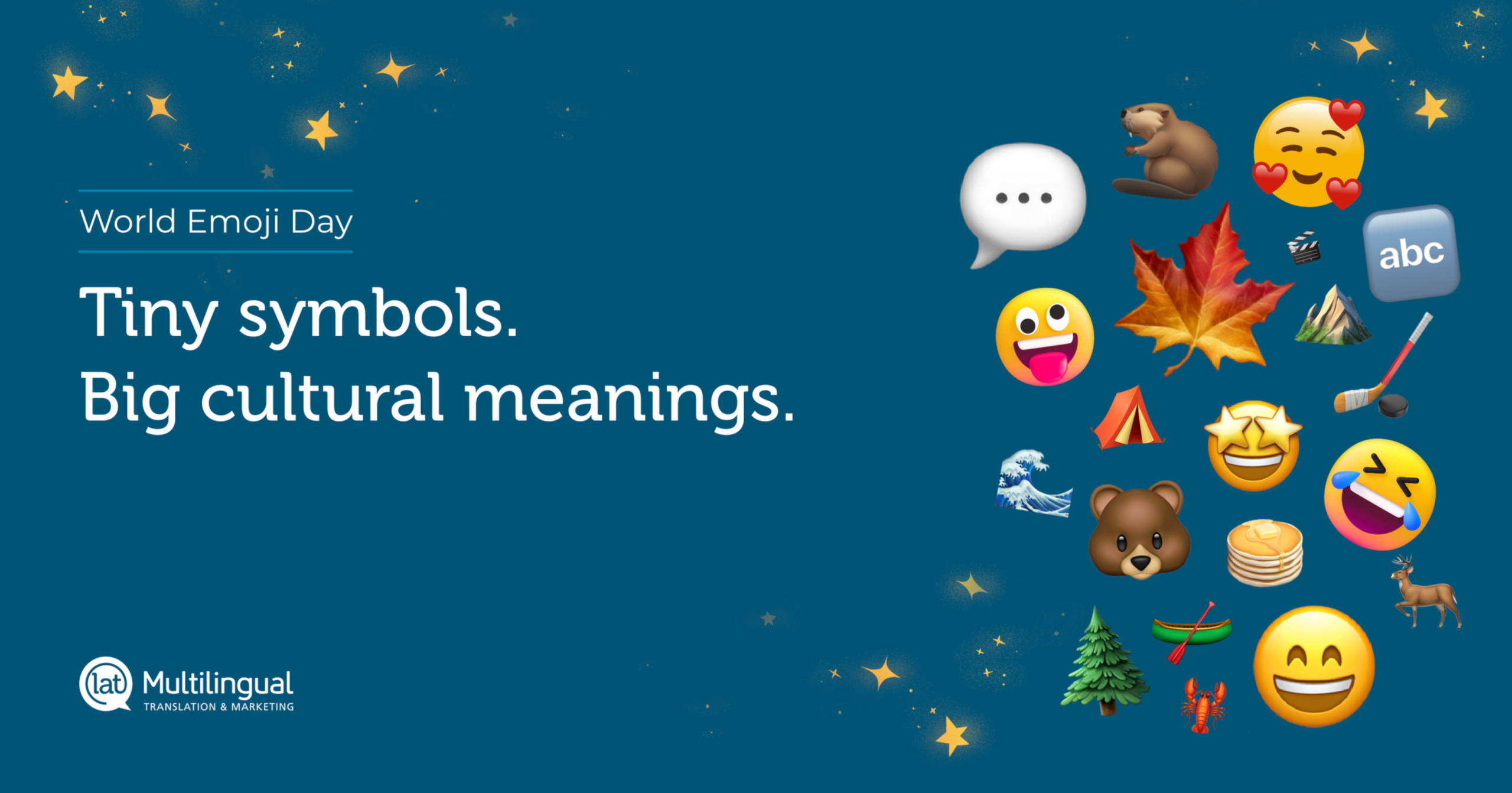
July 17 is World Emoji Day. Why July 17? Because that is the date shown on the calendar emoji 📅. The internet saw a tiny calendar icon and said, “Perfect. A holiday.”
A tiny bit of history
The word emoji comes from Japanese: e (絵) means “picture” and moji (文字) means “character”. First developed in Japan in the late 1990s, emoji have since travelled from mobile screens to global keyboards, where they now help us say everything from “great job” to “I am laughing so hard I have become a skeleton”.
Cultural differences in meaning
Emoji are standardized, but their meanings are not. They travel the world carrying tiny emotional suitcases, and sometimes those suitcases get lost.
Take the thumbs-up 👍. In many Western contexts, it means “sounds good”. In some workplace chats, especially among younger users, it can feel more like “message received, emotionally unavailable”.
The smiling face 🙂 is just as slippery. Friendly? Polite? Mildly threatening? In some Chinese digital contexts, it can read as cold or sarcastic. A smile, apparently, can have range.
Then there is the skull 💀, which technically means death but often means “that was funny”. The loudly crying face 😭 may mean heartbreak, joy, or “this meme has destroyed me”. Context is doing a lot of unpaid labour here.
Cultural variations underneath the symbol
Some emoji carry cultural references that are obvious to insiders and invisible to everyone else, which is exactly how marketing surprises are born.
The folded hands 🙏 can mean prayer, gratitude, respect, “please”, or “thank you for not making me attend another meeting”. A brand may intend appreciation and accidentally sound oddly spiritual, overly formal, or perfectly charming, depending on the audience.
Food emoji are also not always as innocent as they look. A peach 🍑 or eggplant 🍆 can wander far from the produce aisle, while mooncakes 🥮, dumplings 🥟, and tea 🍵 may carry seasonal, social, or cultural meaning that outsiders miss completely.
Even sparkles ✨ and fire 🔥 cannot sit quietly. Depending on the platform, they can signal enthusiasm, irony, approval, beauty, hype, or a brand trying very hard to sound relaxed.
Age and platform matter too
Emoji also change by age group, industry, and platform. What works on RedNote may not work on LinkedIn, where enthusiasm often arrives wearing a blazer. And what feels natural on WeChat may land differently in an email campaign, a public health message, or a product launch.
The short version: emoji are part of the message, not decorative confetti tossed in at the end. A good one can make a brand feel warmer and more human. A bad one can make everyone quietly wonder who approved the caption.
What this means for localization
For brands working across markets, emoji deserve the same care as words, tone, images, colours, timing, and every other small choice that quietly shapes meaning.
Translation is not only about swapping one language for another. It is about adapting the whole message so it feels natural, respectful, and actually funny where humour is intended.
That means knowing how specific audiences communicate: what they find friendly, what they find dated, what they find funny, and what might make them raise one eyebrow in silence.
Small symbols can create big impressions. Choose wisely or at least ask someone before sending the eggplant.